Woodie Guthrie, American folk song legend
Woody Guthrie sings about
the Ludlow Massacre, in which 20 people were killed for striking against coal mine operators in 1914. Happy Labor Day! Enjoy your day off, but give a thought to organized labor, which is what this day is all about.
The first Labor Day was held in 1882. Its origins stem from the desire of the Central Labor Union to create a holiday for workers. It became a federal holiday in 1894. It was originally intended that the day would be filled with a street parade to allow the public to appreciate the work of the trade and labor organizations. After the parade, a festival was to be held to amuse local workers and their families.
Ten demonstrators were killed by police bullets during the "Little Steel Strike" of 1937. When several smaller steelmakers, including Republic Steel, refused to follow the lead of U.S. Steel (Big Steel) by signing a union contract, a strike was called by the Steel Workers Organizing Committee (SWOC) of the Congress of Industrial Organizations (CIO). As a show of support, hundreds of SWOC sympathizers from all around Chicago gathered on Memorial Day at Sam's Place, where the SWOC had its strike headquarters. After a round of speeches, the crowd began a march across the prairie and toward the Republic Steel mill.
They were stopped midway by a formation of
Chicago police. While demonstrators in front were arguing for their right to proceed, police fired into the crowd and pursued the people as they fled. Mollie West, a Typographical Union Local 16 member and a youthful demonstrator at the time, still recalls the command addressed to her: "Get off the field, or I'll put a bullet in your back."
http://www.illinoislaborhistory.org/memorial-day-massacre.htmlDespite the filmed violence, SWOC lost the strike. Continued violence combined with financial pressures to force the workers back in without a contract. Yet time was on the steelworkers side. Some of the companies signed contracts in 1938. In 1942, President Franklin Roosevelt, not wanting any labor issues during the war, put major pressure on the Little Steel companies through the National War Labor Board to recognize SWOC as the legitimate bargaining agent for their workers, which finally forced Girlder and the other steel magnates to cave.
http://www.lawyersgunsmoneyblog.com/2012/05/this-day-in-labor-history-may-30-1937and that pretty much sums up why the governments and police departments of all nations don't want the citizens to have guns, and why it's important for the citizens to have guns... and ammo
the Ford Massacre was a demonstration of unemployed workers starting in Detroit and ending in Dearborn, Michigan, that took place on March 7, 1932.
The march resulted in four workers being shot to death by the
Dearborn Police Department and security
guards employed by the Ford Motor Company. Over 60 workers were injured, many by gunshot wounds. Three months later, a fifth worker died of his injuries. The march was organized by the Unemployed Councils. The Ford Hunger March was an important part of a chain of events that eventually led to the unionization of the U.S. auto industry.
All of the seriously wounded marchers were arrested, and many were chained to their hospital beds. That night, the offices of many Communist and Communist front organizations were raided in the Detroit area, and their leaders were arrested. No law enforcement or Ford security officers were arrested, although all reliable reports showed that they were responsible for all of the gunfire.
http://en.wikipedia.org/wiki/Ford_Hunger_MarchCannery Workers murdered due to manufacturing owners:
http://depts.washington.edu/depress/cannery_workers_union_murders.shtmlPatron, the nephew of a labor contractor, murdered the two men due to their involvement in union efforts to remove the contracting system from the salmon canning industry.
Everyone from carpenters and street car conductors to waitresses and newsboys belonged to a union. In 1919, when Seattle unions gained worldwide headlines by declaring a general strike that shut down the city for five days, some 60,000 workers belonged to 110 unions affiliated with the Seattle Central Labor Council and the Washington State Federation of Labor.
http://depts.washington.edu/depress/strikes_unions.shtml23 November 1903 (United States) Colorado Labor Wars -- Troops were dispatched to Cripple Creek, Colorado to defeat a strike by the Western Federation of Miners, with the specific purpose of driving the union out of the district. The strike had begun in the ore mills earlier in 1903, and then spread to the mines.
8 June 1904 (United States) A battle between the Colorado Militia and striking miners at Dunnville ended with six union members dead and 15 taken prisoner. Seventy-nine of the strikers were deported to Kansas two days later.
19 August 1916 (United States)
Strikebreakers hired by the Everett Mills owner Neil Jamison attacked and beat picketing strikers in Everett, Washington. Local police watched and refused to intervene, claiming that the waterfront where the incident took place was Federal land and therefore outside their jurisdiction. (When the picketers retaliated against the strikebreakers that evening, the local police intervened, claiming that they had crossed the line of jurisdiction.) Three days later, twenty-two union men attempted to speak out at a local crossroads, but each was arrested; arrests and beatings of strikebreakers became common throughout the following months, and on 30 October vigilantes forced IWW speakers to run the gauntlet, subjecting them to whipping, tripping kicking, and impalement against a spiked cattle guard at the end of the gauntlet. In response, the IWW called for a meeting on 5 November. When the union men arrived, they were fired on; seven people were killed, 50 were wounded, and an indeterminate number wound up missing.
26 August 1919 (United States) United Mine Worker organizer Fannie Sellins was gunned down by company guards in Brackenridge, Pennsylvania.
22 September 1919 – 8 January 1920 (United States) The "Great Steel Strike" began. Ultimately, 350,000 steel workers walked off their jobs to demand union recognition. The AFL Iron and Steel Organizing Committee called off the strike on 8 January 1920, their goals unmet.
11 November 1919 (United States) Centralia Massacre -- IWW organizer Wesley Everest was lynched after a Centralia, Washington IWW hall was attacked by Legionnaires.
22 December 1919 (United States) Amid a strike for union recognition by 395,000 steelworkers (ultimately unsuccessful), approximately 250 "anarchists," "communists," and "labor agitators" were deported to Russia, marking the beginning of the so-called "Red Scare."
19 May 1920 (United States) The Battle of Matewan.
Despite efforts by police chief (and former miner) Sid Hatfield and Mayor Cabel Testerman to protect miners from interference in their union drive in Matewan, West Virginia, Baldwin-Felts detectives hired by the local mining company arrived to evict miners and their families from the Stone Mountain Mine camp. A gun battle ensued, resulting in the deaths of 7 detectives, Mayor Testerman, and 2 miners.
Baldwin-Felts detectives assassinated(Police Chief) Sid Hatfield 15 months later, sparking off an armed rebellion of 10,000 West Virginia coal miners at the "Battle of Blair Mountain," dubbed the "redneck war" and "the largest insurrection this country has had since the Civil War." Army troops later intervened against the striking mineworkers in West Virginia.
22 June 1922 (United States) Herrin massacre-- Thirty-six people are killed, 21 of them non-union miners, during a coal-mine strike at Herrin, Illinois.
the 1934 San Francisco general strike on the waterfront, the national guard were called in, with tanks :
These scare tactics led to an investigation of employer actions by a Senate subcommittee. The flagrant destruction of many of the records of the Industrial Association, described in this report, effectively prevented the Committee from obtaining full documentary evidence on the activities of the association. Violations of Free Speech and Rights of Labor, the subcommittee’s 1942 report, described the concerted efforts of the Industrial Association, the newspapers, and the San Francisco police to discredit the strike.
Didn't see that in your American History book did you. Just one case in a long history of corporate greed versus workers and unions, and just one example of the people with the money doing anything at all to make more money and the people with power abusing it. Both the money and the power calling the shots and forcing the cops and national guard to shoot the strikers. No kidding. Photos from


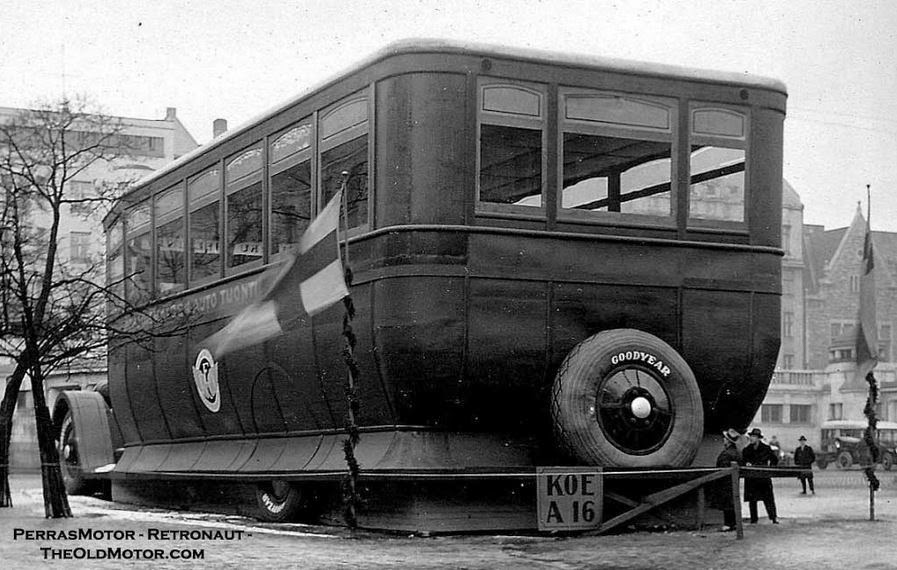


.jpg)
.jpg)